



Ask a shop owner what a return costs and the answer is a small round number. The return label. Maybe the outbound shipping too. A few minutes at the desk. Twenty euros, thirty, depending on the carrier. That number is not wrong. It is the visible third of the bill.
The rest is spread across the payment provider's statement, the carrier invoice, the stock report, the support inbox and the reviews page, and no line in any of them says return. This article puts the lines together, gives the EU rules that shape them, adds them up for one ordinary order, and then goes through what a shop can actually do about each one.
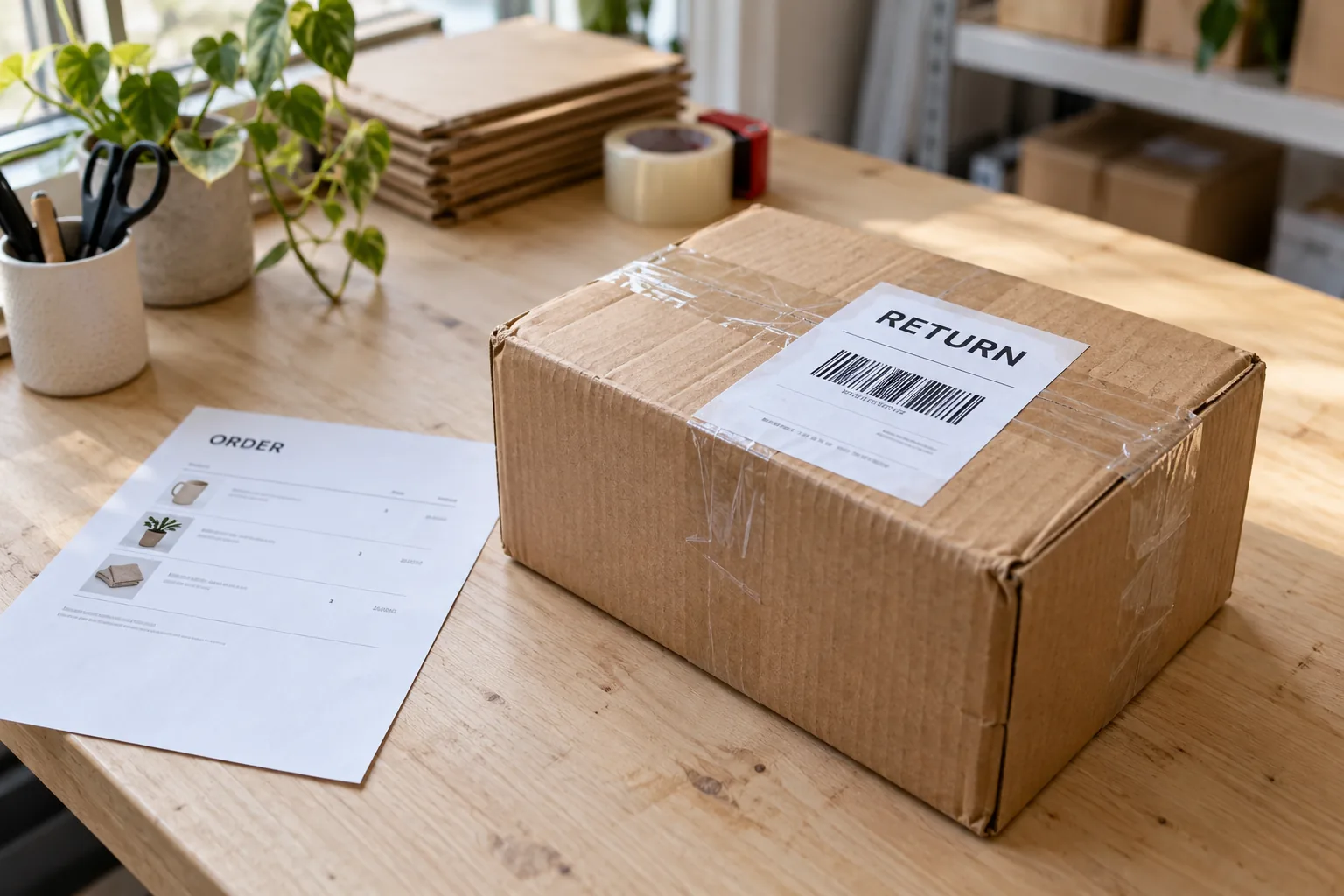
The money that leaves twice
Start with the cash, because it is the part that feels understood and is not.
- The refund. You give back the full price and, under EU rules, the standard delivery cost you charged. The Directive is explicit: the trader must reimburse "all payments received from the consumer, including, if applicable, the costs of delivery" within 14 days of being informed of the withdrawal. S1 You may keep the difference if the customer chose a delivery option dearer than your cheapest standard one. S1
- The payment fee you do not get back. The processor took a percentage plus a fixed amount when the customer paid. Stripe, for example, states that "Stripe's processing fees from the original transaction aren't returned" when you refund. S2 On a 60-euro order that is a euro or two that left with the sale and stays gone with the refund.
- The outbound shipping you already paid. If you offered free shipping above a threshold, the customer paid nothing and you paid the carrier. The parcel travelled, and nobody travels it back for free.
- The return shipping. Under the Directive the customer "shall only bear the direct cost of returning the goods unless the trader has agreed to bear them or the trader failed to inform the consumer that the consumer has to bear them". S1 If your policy says free returns, or your checkout never mentioned who pays, that is you. In DHL's 2025 survey of 24,000 online shoppers across 24 countries, 55% said they mainly buy from retailers that offer free returns S6, so many shops choose to pay it. Choose it knowingly.
- The goodwill. The discount code that goes out with the apology. In no policy, on every support desk.
The weeks the product is gone
A returned item is stock you paid for that nobody can buy. How long that lasts is set by the rules more than by the customer.
The Directive gives the customer 14 days from delivery to decide S1, then 14 more days from telling you to send the goods back. S1 Add transit and your own receiving and inspection, and an item can be off the shelf for a month or more without anyone doing anything wrong. That is arithmetic on the Directive, not a measured average, but it is the arithmetic every return runs on.
Meanwhile the refund clock runs the other way. You must refund within 14 days of being told, and you may withhold it only "until he has received the goods back, or until the consumer has supplied evidence of having sent back the goods, whichever is the earliest". S1 Evidence of sending is a photo of a locker receipt. In practice the money often leaves before the parcel arrives.
Then there is what the month does to the item. Seasonal stock comes back after the season. A size run with the M missing sells worse, because the M was the size that was selling. A box that has been opened, tried and re-taped is not quite the box you sent, and the customer who receives it next can tell.
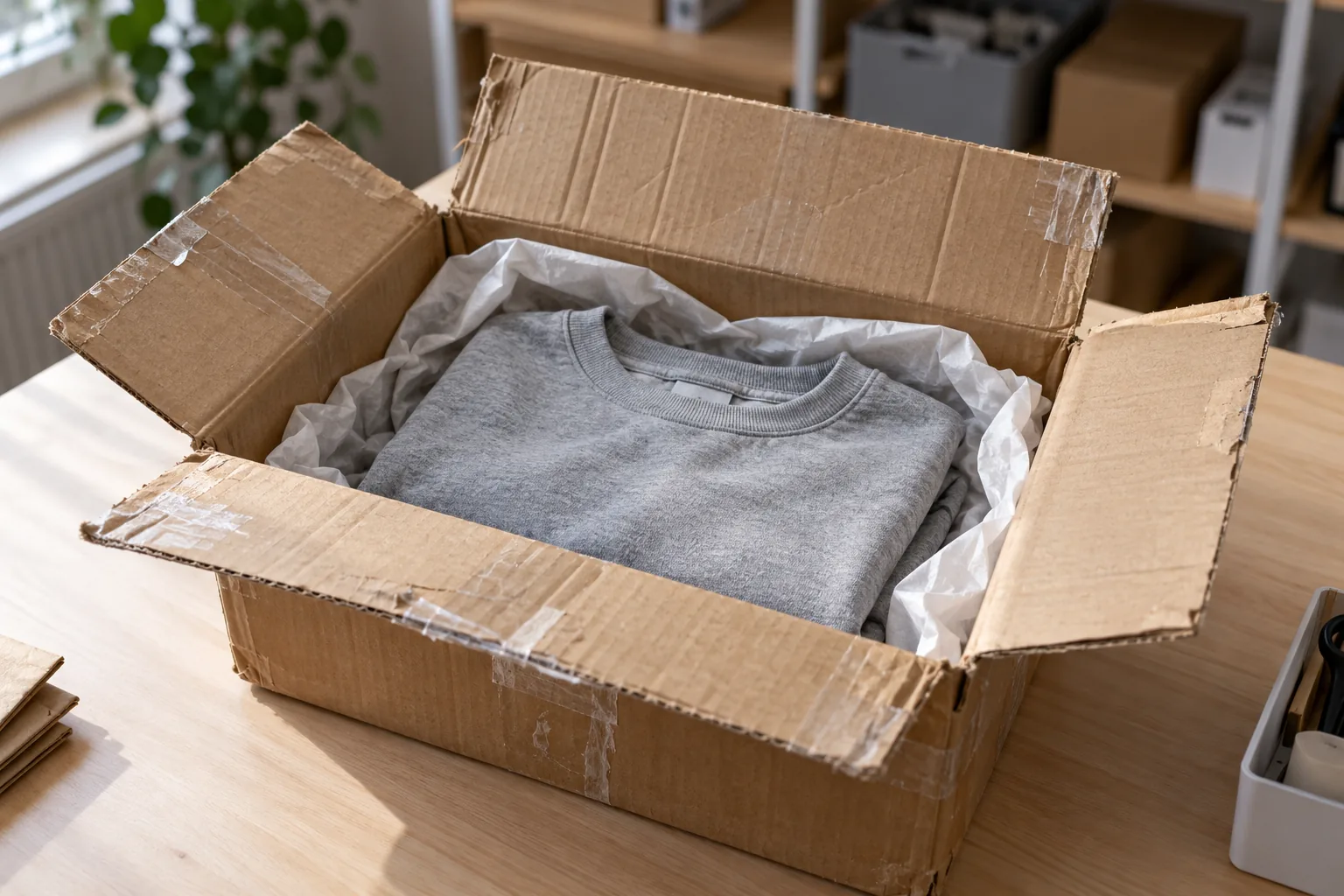
The handling nobody bills
Walk one return through a shop that has not set anything up for it, and count the people.
- The customer emails to ask how to return. Someone reads it and replies with the address.
- The customer asks for a label. Someone logs into the carrier's portal, creates a return shipment, downloads the PDF and emails it.
- The parcel arrives. Someone works out which order it belongs to, because the label carries the customer's name and the order number is inside the box, if it is there at all.
- Someone opens it, checks the item, decides whether it can be sold again, and puts it back on the shelf or in the reject pile.
- Someone updates the stock in the shop admin so the item is buyable again.
- Someone issues the refund in the payment provider and marks the order in the shop.
- The customer emails to ask where the refund is. Someone replies.
Seven touches, three systems, no queue. Most shops estimate this at a few minutes because each touch is a few minutes. The return takes a week because the touches are spread across it, and the customer experiences the week, not the minutes.
The platforms know this is manual. Shopify's return rules let you set a return window, a flat return shipping fee or "a restocking fee that is a percentage of the return", and the same page notes that "return fees aren't automatically deducted from refunds. When you create a refund, you need to manually deduct any applicable return fees." S3 One more touch.
The customer you may not get back
A return is the second time a customer deals with your shop, and it is the interaction they remember.
In the 2025 Happy Returns and National Retail Federation survey of 2,006 US consumers who had returned something online in the previous year, 71% said a poor returns experience would make them less likely to shop with the retailer again, up from 67% a year earlier. S5 The same report, as summarised by UPS, has about 81% of consumers reading the return policy before they buy. S7 They read it before the first order. They test it before the second.
Europe has its own preference about how a return should go. In DHL eCommerce's 2025 survey, 79% of European shoppers preferred to return via a parcel locker or a shop rather than wait for a courier, and 79% of shoppers globally said they abandon a cart if their preferred returns option is not offered. S6 A carrier ran that survey, so treat the exact figures as a carrier's figures, but the direction matches what anyone in the Baltics sees at a locker on a Monday.
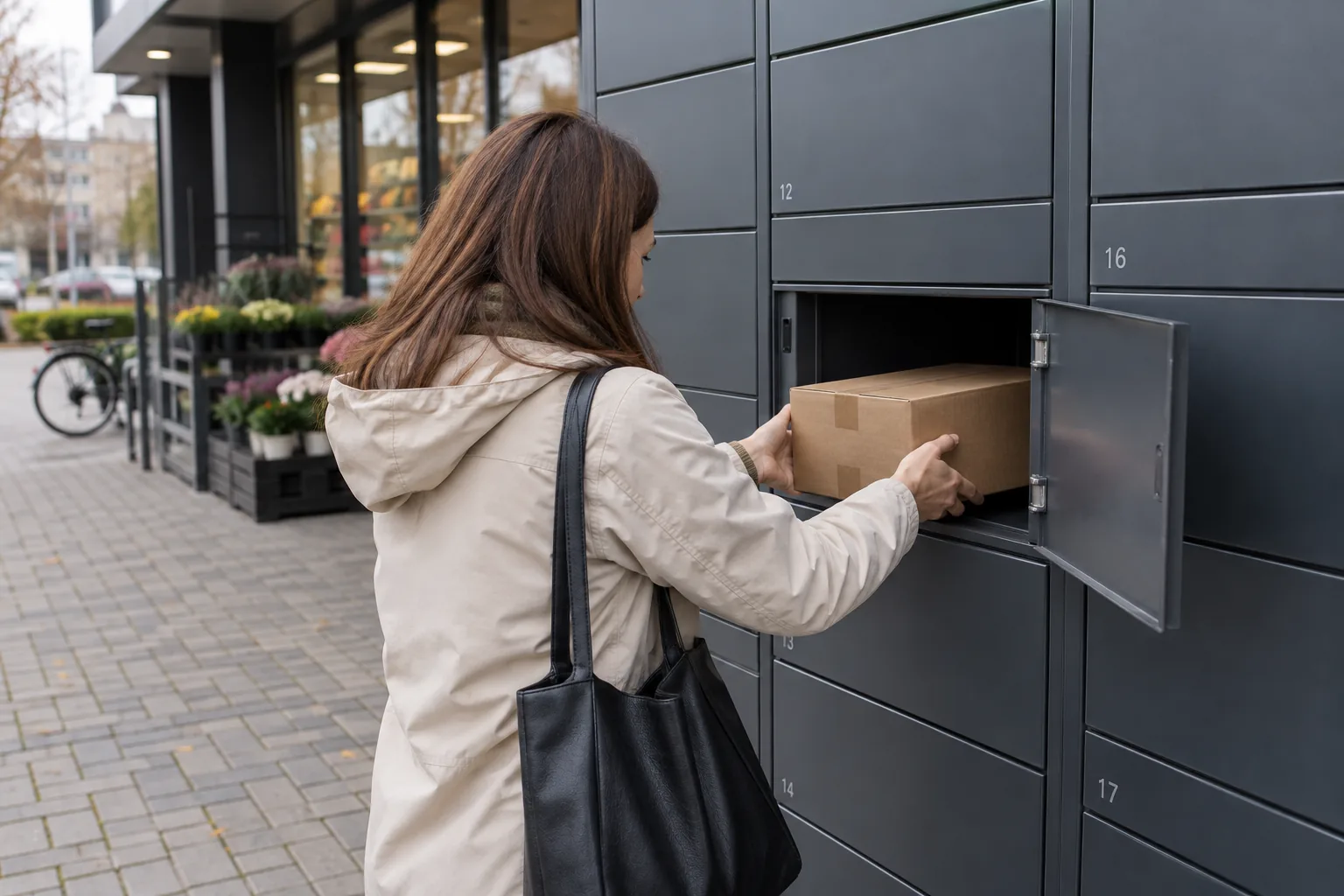
The review is the tail end of this. A return that took a week and three emails is what the customer writes about, not the product they sent back. That cost has no line at all; it lands on the next customer's decision.
The returns you caused
Every return so far started with the customer changing their mind. A share of returns start with you: the wrong size picked from the shelf, the wrong colour, a missing item. Those carry the whole bill above, plus a replacement shipment, and none of the revenue survives.
This is the one category of return with a cost of zero if you prevent it. A packing flow that scans every item against the order before the label prints cannot ship the wrong size. The story of how that changed one packing table is on this blog, and it starts with products that carry SKUs and barcodes to scan.
The NRF survey also puts 9% of all returns down to fraud, in the US and by retailer estimate. S5 A returns process that records what came back, in what condition, against which order, is the only defence a small shop has against a claim it cannot check.
Adding it up for one order
Here is one ordinary order, with every number assumed. They are chosen to be ordinary for a Baltic shop shipping to lockers, and they will not be yours; the point is the shape of the total, not its size.
| Cost line | Where it hides | Assumed |
|---|---|---|
| Refund to the customer | Payment provider | 60.00 EUR |
| Payment fee not returned | Processor's statement; Stripe keeps the original fee S2 | 1.15 EUR (1.5% + 0.25) |
| Outbound shipping you paid | Carrier invoice; free over 50 EUR, so the customer paid nothing | 3.00 EUR |
| Return label | Carrier invoice, if you offer free returns | 3.00 EUR |
| Receiving, checking, restocking | Warehouse time, 15 minutes | 3.00 EUR at 12 EUR an hour |
| Return and refund emails | Support time, 10 minutes | 2.00 EUR |
| Repackaging | Materials | 0.50 EUR |
| Value lost on the item | Opened, marked, out of season, or not resellable | 0 to the full cost of the item |
| Weeks the item is not for sale | Stock report | Up to a month or more by the rules alone S1 |
Reasoning, not evidence. The euro figures are assumptions for illustration, not measured costs; replace them with your own carrier prices, fee schedule and minutes. The deadlines are from Directive 2011/83/EU. S1
Cash out on those assumptions, before touching the item's value: 12.65 euros, on an order where the shop probably booked about 24 euros of gross margin if it runs at 40%. The sale has become a loss of about 13 euros, the item is out for a month, and the customer is deciding whether to order again. That is the 30-euro return.
Now multiply. There is no European figure with a disclosed method for how common returns are, so here are the American ones: in NRF's 2025 survey, retailers expected 19.3% of online sales to be returned S5; in the 2022 Pitney Bowes survey of 168 US online retailers, online returns cost an average 21% of order value. S4 Both are US, both are mid-to-large retailers, both self-reported. A shop selling supplements will be far below them and a shop selling shoes may not be. Your own rate is one report away, and it is worth running before the season.
What it adds up to
A table is easy to nod at and forget. Here are the same numbers, defined the same way, first for one return and then for a shop's month and year.
Per return, on the example above
12.65 EUR
Cash out per return
Fee kept 1.15 + outbound shipping 3.00 + return label 3.00 + handling 3.00 + support 2.00 + repackaging 0.50. The 60.00 refund is not counted: it is the customer's money going back.
-12.65 EUR
Where the order ends
It was a +24.00 EUR order at 40% gross margin. After the return it is a 12.65 EUR loss: a swing of 36.65 EUR, before any loss on the item itself.
28 days
Off the shelf, minimum
14 days for the customer to decide plus 14 to send it back, before transit and your own receiving. S1
Per month and year, at 1,000 orders a month and a 10% return rate
100
Returns a month
1,000 orders × 10%. US retailers expect 19.3% of online sales to come back S5, so 10% is the gentle case.
3,665 EUR
Gone every month
100 × 36.65: the 2,400 EUR of margin those orders would have kept, plus 1,265 EUR of cash out.
43,980 EUR
Gone every year
Twelve months of the same, with the items themselves still not counted. At the US return rates, roughly double it.
Reasoning, not evidence. These scale the worked example with two more assumptions, 1,000 orders a month and a 10% return rate; replace every figure with your own. The only return-rate surveys with a disclosed method are US retailer surveys. S4,S5
How to make a return cost less
In order of leverage. The first one is the only one that gets the cost to zero.
- Stop causing them. Scan every item against the order before the label prints. A wrong-size shipment is a return you paid for twice.
- Put the rules where the customer reads them. The Directive only lets you pass on return shipping if you told the customer before purchase S1, and about 81% of surveyed US consumers say they read the policy before buying. S7 Write it once, plainly: the window, who pays, how to start.
- Take the request on the site, not in the inbox. A form that captures the items and the reason removes the first two emails and gives you data you can act on.
- Issue the label on your own contract, through the network the customer already uses. In Europe 79% of surveyed shoppers prefer a locker or a shop drop-off. S6 A locker return in the same network as the delivery costs you the locker rate, not a courier collection, which is one more reason to run more than one carrier.
- Receive and restock the same day. Once the parcel is in, the rest of the month the item is gone is waiting on your side. The receiving desk needs the order in front of it when the parcel arrives, not a search.
- Refund on receipt, not on the deadline. The Directive gives you 14 days. S1 The customer remembers how many you used.
- Offer an exchange first. An exchange keeps the revenue and turns a refund into a second shipment.
- Count reasons per product. Three returns of the same shirt for "too small" is a size chart problem, not a returns problem.
- Decide free returns with numbers, not nerves. 55% of DHL's respondents mainly buy from retailers that offer free returns. S6 What it costs you is the return label times your return rate, plus whatever the easier path adds to that rate. Measure both before choosing.
None of this makes returns free. It makes them a process with a cost you know, instead of a week of emails with a cost you guess at. The 30 euros was never the problem. Not knowing the rest was.